Bangladesh: Woman, teenage daughter gang-raped during robbery in Cox’s Bazar
A gang of eight to 10 robbers entered their residence after cutting through the window grills, an official said.
Bangladesh’s Islamist and Jamaat-aligned political spectrum immediately interpreted Dinesh Trivedi’s remarks as evidence of “India’s hegemonistic designs”.




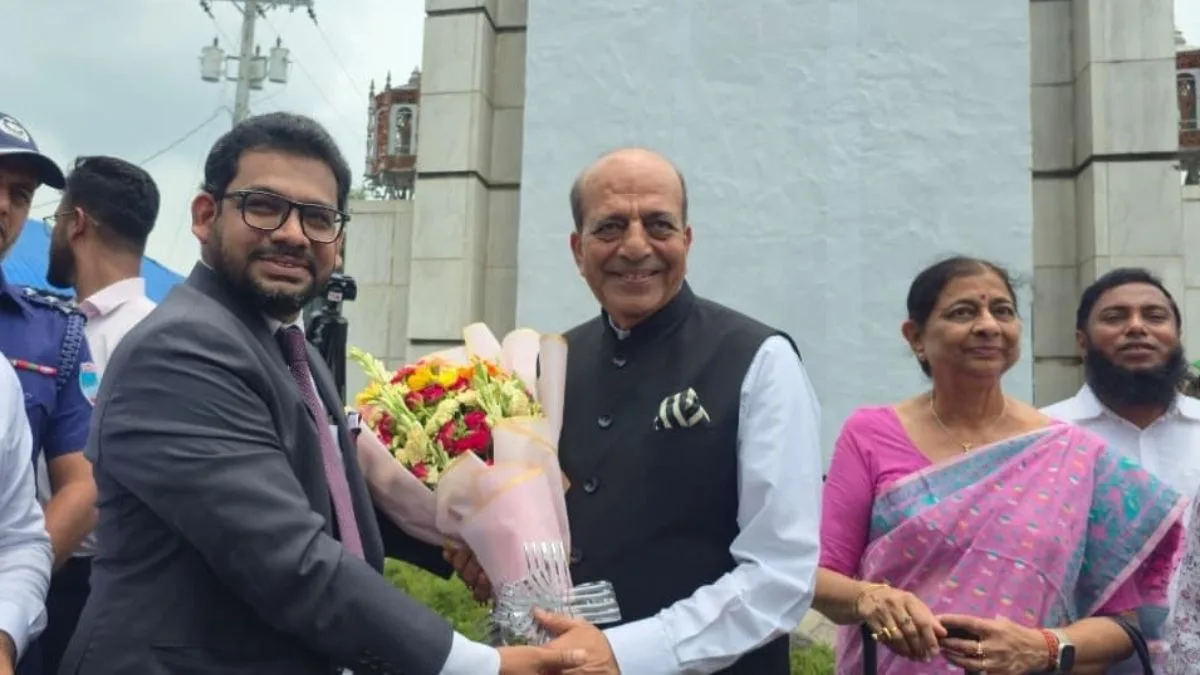
Image: IANS
The twitteratti in both India, and more so in Bangladesh brewed a storm in a tea cup over the last week over two seemingly unrelated incidents which revealed how emotionally charged relations remain despite the best of intent on both sides.
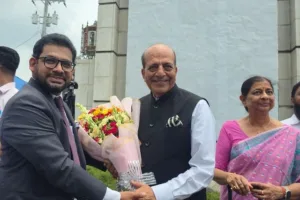
The first involved Dinesh Trivedi, India’s newly appointed High Commissioner to Bangladesh. Rather than arrive in Dhaka through the insulated rituals of official diplomacy, Trivedi and his wife crossed the Petrapole-Benapole border on foot. The symbolism was unmistakable. Here was a politician, not a career diplomat, attempting to emphasise proximity over protocol and people over politics.
Advertisement
Upon arrival, Trivedi quoted a song by Bhupen Hazarika, speaking of Indians and Bangladeshis sharing “the same sky, the same air” and the same suffering. He suggested that the combined aspirations of 1.6 billion people could create a common future.
Advertisement
The honest statement made in an era where climate change has put both the nations at risk, with Bangladesh projected to lose 17 per cent of its land to the sea by 2050 while India is expected to face both sea-inundation and longer and more intense heatwaves, was however greeted by the usual volley of strident criticisms.
Bangladesh’s Islamist and Jamaat-aligned political spectrum immediately interpreted the remarks as evidence of “India’s hegemonistic designs”.
The Jamaat-i-Islami which supports Pakistan and still feels the 1971 liberation war as an anachronism, demanded explanations and questioned whether Bangladesh’s sovereignty was being sufficiently respected.
The reaction said less about Trivedi’s words than about the depth of mistrust that still shadows the relationship especially among those in the neighbouring nation’s far right.
“This was a deliberate attempt by the Jamaat leadership to misconstrue a perfectly well intentioned statement into a controversy to queer the pitch between the two countries,” Veena Sikri, former High Commissioner to Bangladesh told UNI.
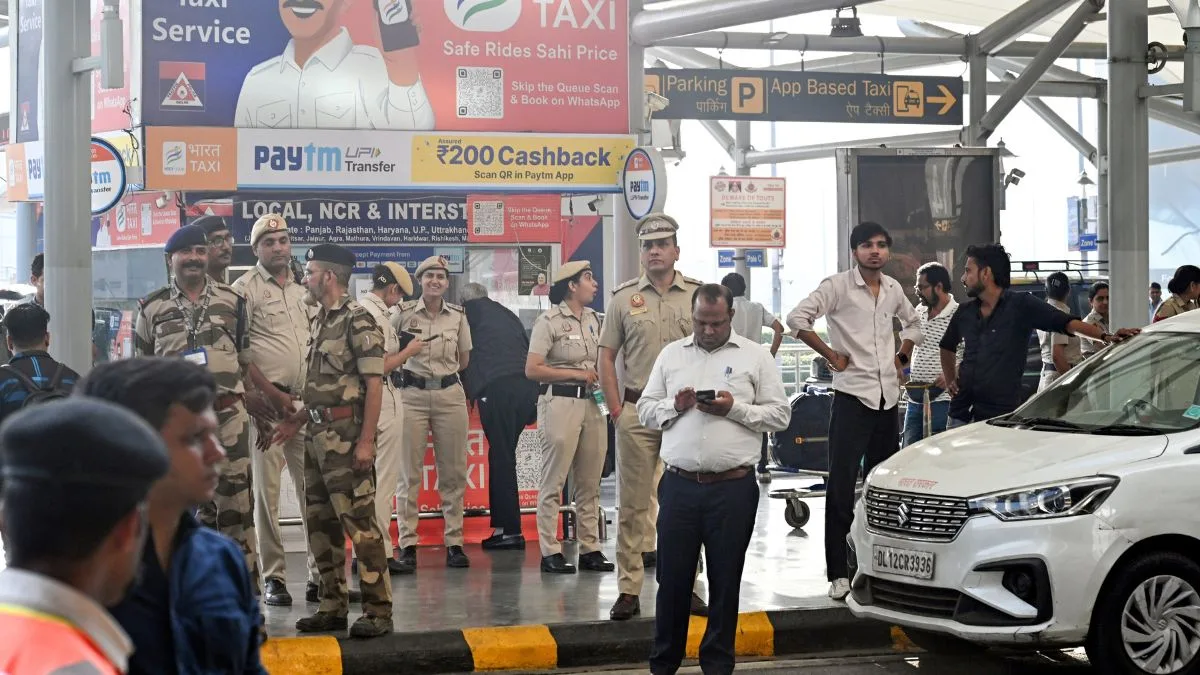
The second controversy unfolded at Delhi’s airport on a peaceful Sunday. Dr Zahed Ur Rahman, an adviser to Bangladesh’s prime minister, arrived in India to attend an official conference on the Indian Ocean.
He was travelling on a private passport carrying an old SAARC visa sticker rather than a diplomatic passport, which a ministerial ranking representative leading an official delegation should have.
What followed appears to have been a bureaucratic muddle. On a holiday, when many government offices were closed, confusion over documentation delayed his entry.
By the time the issue was clarified and permission was granted, Rahman chose to return home.
The episode quickly became a diplomatic talking point. Yet it was less a conspiracy than a comedy of errors, one that better coordination on both sides could almost certainly have avoided.
Viewed separately, these incidents are minor. Viewed together, they illuminate a larger question: are India and Bangladesh prepared to take a leap of confidence?
The answer matters because the relationship stands at a crossroads. Bangladesh is undergoing significant political change. India is recalibrating its regional diplomacy.
The old certainties that shaped relations during the previous regimes no longer exist. New actors, new political forces and new strategic calculations are emerging on both sides of the border.
“Both sides have a matured leadership. Dinesh Trivedi is a seasoned politician and everyone knows that the relationship which had deteriorated in the 18 months of the Yunus regime are now on the mend,” pointed out Shantanu Mukharji, former National Security Advisor to Mauritius, “Let trivial issues like these be put on the backburner, so that we can go forward together.”
Analysts believe that the new era of bonhomie is being put at risk by a section of hardliners within Bangladesh who wish to lock Bangladesh into a riskier path of strategic animosity towards its neighbour.
“Jamaat acted as initiators in the whole business of greater Bangladesh and the virulent anti-India voices that were heard during the Yunus period. Allowing such thinking to skewer the relationship would be bad for both nations,” added Sikri.
Trivedi probably understands this and had directed his speech not primarily to political veterans trapped in historical grievances, but rather to a younger Bangladesh, a generation that wants jobs, investment, education, connectivity and opportunity.
As most sociologists agree, this is a generation that has little interest in relitigating every dispute of the past century.
The fact is that the young people of Bangladesh and India share the same digital spaces, confront similar economic and climate change anxieties and aspire to similar futures.
“ They are less interested in ideological battles than in whether their governments can create conditions for prosperity,” pointed out Samata Biswas, an expert on migration and gender studies who works with the Calcutta Research Group.
Trivedi’s walk across the border was, in its own modest way, an invitation to think differently about the future. Whether India and Bangladesh accept that invitation may determine the course of one of South Asia’s most consequential relationships in the years ahead.
Advertisement